
Etching Process
Texturing Process
- Incoming Inspection
- Mold Cleaning
- Drawing Review
- Surface Protection
- Sandblasting
- Chemical Test
- Sandblasting
- Drawing Review
- Texture Transfer
- Etching
- Sandblasting
- Gloss Adjustment
- Measurement
- Remove Protection
- Documentation
- Apply Rust Preventive
- Packaging
- Dispatch
Production Process
intermediate process · Production
- A Cleaning
- B Masking
- C Sandblasting
- D Chemical Test
- E Spraying / Printing
- F Etching
- G Oxidation
- H Test Report
- I Sandblasting
- J Removing Tape · Packaging
Texturing Process Comparison
| Process | Suitable Textures | Considerations |
|---|---|---|
| Sandblasting | Fine EDM-like textures | Produces an even tactile surface. Scratch resistance and production life require review, and parting lines need careful protection. Processing is comparatively straightforward and efficient. |
| Film Exposure | Regular patterns with protected mirror-finish areas | Photoresist thickness, washing and repeat exposure require careful control. The resulting surface offers comparatively good scratch resistance. |
| Coated Texturing | EDM-like and larger dot textures | Provides longer service life and better scratch resistance than basic sandblasted textures. Local texture damage can be repaired comparatively efficiently. |
| Film Transfer | Leather-like and multilayer automotive textures for instrument panels, door panels and similar components | Multiple layers create depth and visual continuity. Repeated etching can affect parting lines, so an appropriate processing margin is recommended. |
| Laser Engraving | Crisp geometric textures for automotive decorative parts | Produces clearer, sharper edges than film exposure, but processing is slower and more costly. The mold requires high initial machining accuracy and repairs are more involved. |
Process Workshop
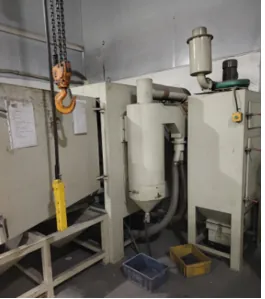
Sandblasting 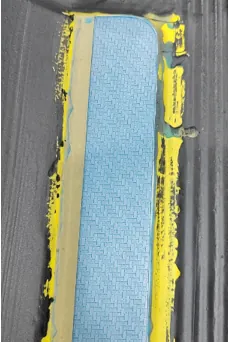
Film Exposure 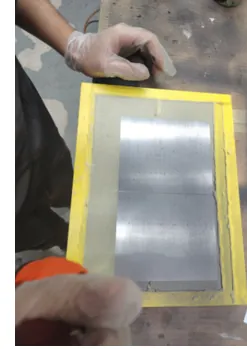
Coated Texturing 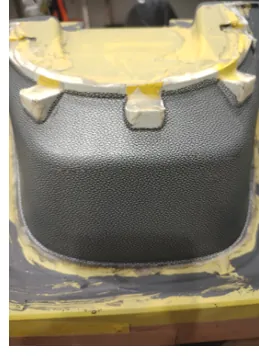
Film Transfer